
Gherkin Cultivation
Preparation for Sowing Gherkins
Successful gherkin cultivation depends on favourable environmental conditions, particularly climate and soil quality. The ideal temperature range is between 18°C and 32°C, with well-drained sandy loam soil and a pH level of 6.5 to 7.5. Prior to sowing, the soil should be thoroughly tilled to a depth of around 45 cm and enriched with 10 to 12 tonnes of farmyard manure per acre to improve fertility.
In addition to organic inputs, a basal application of chemical fertilisers is recommended: 30 kilograms of Nitrate, 20 kilograms of Phosphate, and 32 kilograms of Potash per acre. Neem cake, valued for its natural pest-repellent qualities, should also be incorporated before covering the furrows with soil. This combination of organic matter, balanced nutrients, and pest management practices creates an enriched environment that supports strong germination and healthy growth of gherkin plants.
Sowing Process for Gherkins
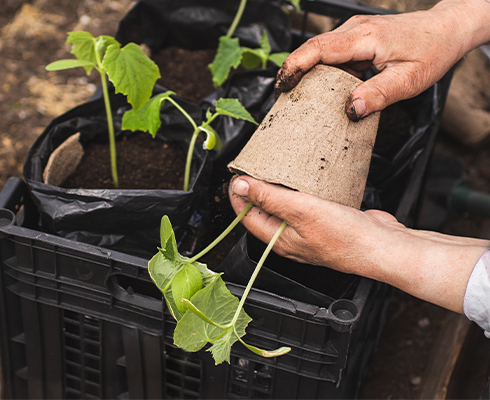
For effective sowing, about 300 to 320 grams of gherkin seeds are required per acre. Seeds should be placed at a depth of 2.5 cm along the ridges, with a spacing of roughly 30 cm between plants. Once sown, the furrows must be irrigated immediately to encourage early growth. Under favourable conditions, germination usually occurs within seven days.
To achieve uniform crop development, any gaps in the field should be filled by re-sowing within three days. Overcrowded areas need to be thinned by removing excess plants to maintain proper spacing. When the seedlings reach the fourth leaf stage, it is recommended to remove the cotyledon leaves and dispose of them safely, preferably by burning. This practice helps to prevent leaf miner infestations and supports the overall health and productivity of the crop.
Weeding and Staking in Gherkin Cultivation
Regular weeding is vital in gherkin farming due to the crop’s short duration and the intensive fertilisation it requires. After each weeding, applying a top dressing followed by light raking of the soil helps stimulate healthy plant growth.
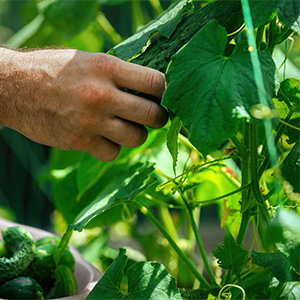
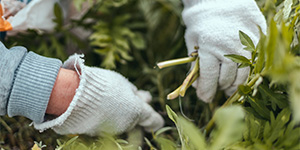
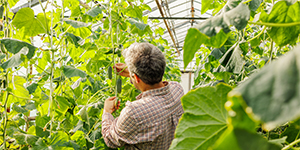
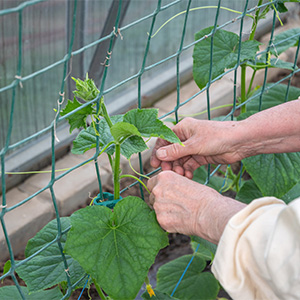
Staking should begin 16 to 20 days after planting. Wooden stakes measuring about 2.4 metres in length and 5 cm in diameter are commonly used. These stakes are arranged in sequence and connected with galvanised iron wire at the top and bottom, then reinforced with jute thread to provide a strong framework for the vines.
The vines are manually guided to climb along the jute threads. Staking plays a critical role in keeping the plants upright, improving air circulation, and making cultural operations such as weeding and harvesting more efficient. Without staking, vines remain in contact with the soil, reducing ventilation and increasing the risk of disease.
Plant Protection Strategies
At Fafodil, farmers adopt Integrated Pest Management (IPM) techniques to ensure the healthy growth of gherkin crops. This holistic approach combines preventive measures such as crop rotation, manual removal of pests, bait application, and maintaining adequate distance from crops that typically attract insects and pests.
The reliance on chemical pesticides is kept to a minimum, ensuring that residue levels remain well within international safety standards. This is critical, as even trace amounts of excess residue can render produce unsuitable for export. At the same time, inadequate pest control poses its own risks, with the potential to reduce crop yield and quality by up to 50%. By balancing natural practices with carefully monitored protection methods, Fafodil maintains both the safety and premium quality of its gherkin exports.
Harvesting Practices
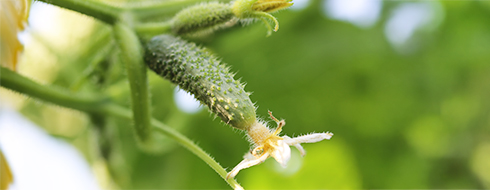
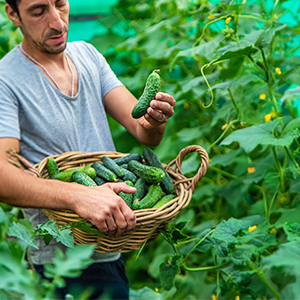
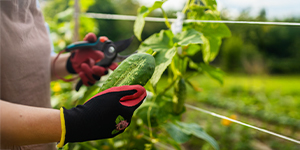
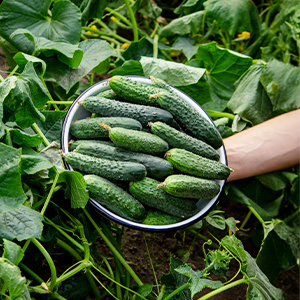
Gherkin fruits are ready for harvest once they reach the size required for premium grade, which commands the highest market value. This stage is generally achieved within one month of growth. From this point, harvesting should be carried out daily for the next two months to ensure continuous production.
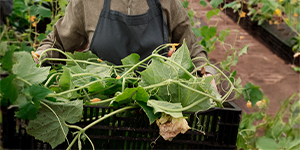
Gentle handling is essential: fruits must not be plucked with nails to avoid damage, and collection should only be done using bamboo baskets to preserve their quality. After harvesting, the fruits should be placed in netted bags or large baskets and kept in shaded areas until further processing.
Any fruits affected by disease, physical damage, or contamination with foreign matter must be removed. Throughout the process, strict adherence to Fafodil’s specifications ensures that only fruits of the right size, freshness, and quality are selected for export.
Storage and Inspection Practices
For temporary storage, harvested gherkins are kept in a rectangular shed with a roof and three enclosed sides, providing protection until collection by company representatives. A clean tarpaulin is spread on the floor, where the fruits are laid out for final inspection to identify and remove any defective produce. Adequate ventilation, together with protection from sunlight and rain, is vital for maintaining freshness and quality during this stage.
After inspection, only fruits that meet the required standards are carefully placed into large bamboo baskets or netted bags, ready for pickup. The storage area must be kept free from fertilisers, empty bags, pesticides, or sprayers to prevent any risk of contamination. This careful approach ensures that only the finest gherkins are delivered for processing, in line with Fafodil’s strict quality commitments.