

The Best Gherkin
At Fafodil’s facilities, gherkins are carefully sorted and graded to ensure consistency and premium quality. Valuation is based on count, which refers to the number of fruits per kilogram. Following the industry principle “higher the count, greater the value,” Fafodil applies an established grading scale that includes categories such as 300/450, 150/300, 120/150, 80/150, 80/120, 60/80, 30/60, 30/40, 20/30, 10/20, and 5/10.
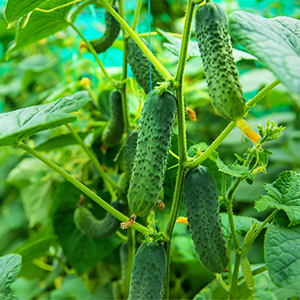
Experts agree that the ideal gherkin maintains a length-to-diameter ratio of 3:1, typically measuring between two and four inches long. Preferences, however, vary across regions: in North America, the sought-after gherkin is one with approximately seven warts per square inch, while European consumers favour a smoother fruit with little to no surface warts.
Botany
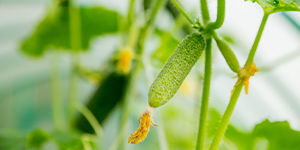
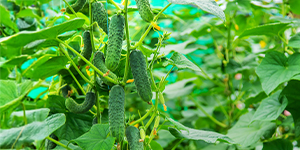
The gherkin cucumber, scientifically known as Cucumis sativus from the cucurbit family, is a vegetable crop that can be harvested within 30 to 90 days of sowing. For better ventilation, easier weeding and harvesting, and effective disease control, the plants are typically trained to climb on stakes reaching about two and a half metres in height. Cross-pollination, carried out mainly by honey bees, begins soon after planting, with harvesting starting around 28 to 30 days later.
Only fruits measuring between 12 mm and 25 mm in length are selected for processing, as larger fruits command a lower market value. The crop is vulnerable to pests such as the gherkin fruit borer, melon fly, melon thrips and aphids, as well as diseases including downy mildew, powdery mildew and fusarium wilt.
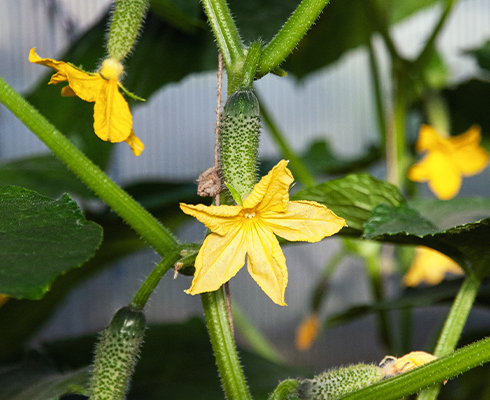
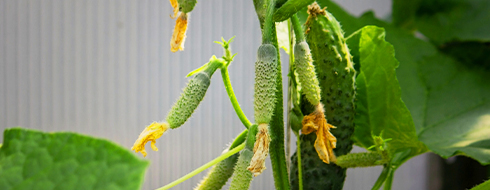
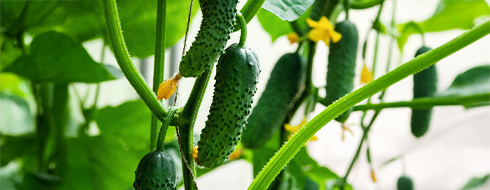
To manage these challenges, strict precautions are observed in the application of pesticides and insecticides, ensuring residues remain well within international safety standards to avoid the risk of rejection. At Fafodil, natural measures such as crop rotation and the use of bait traps are actively promoted to reduce dependency on chemicals.
The experienced team at Fafodil works closely with farmers to implement these practices, providing guidance at every stage of cultivation. Buyers are also welcome to request site audits, reinforcing Fafodil’s commitment to transparency, sustainability, and uncompromising quality in its farming operations.
Varieties
Cucumbers fall broadly into two categories: smooth-skinned and spiny-skinned. It is the spiny-skinned type that is prized for pickling and internationally recognised as gherkins. This variety is cultivated in India exclusively for export, as there is little domestic demand. Once harvested, gherkins are carefully graded into four size categories and preserved in three different pickling preparations, designed to meet diverse global market preferences.
Size classification is determined by counts, which indicate the number of fruits required to make up one kilogram. Counts range from 300 to 450 fruits per kilogram, representing the highest value, down to 5 to 10 fruits per kilogram, which denotes the lowest. In assessing size, diameter is considered more critical than length.
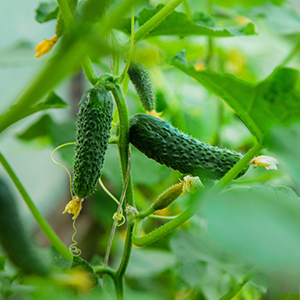
Preservation methods involve three types of packing media: natural vinegar, acetic acid, and brine. For gherkins packed in brine, salinity is maintained at 15% sodium chloride, with a tolerance of ±1%. Acidity, expressed as lactic acid, must be above 0.6%, and pH below 3.5. In acetic acid and natural vinegar, acidity is maintained at 3.2% with a tolerance of ±0.2%, and salinity at 4% with a similar allowance. These standards may be adapted over time to align with specific buyer requirements and international regulations.